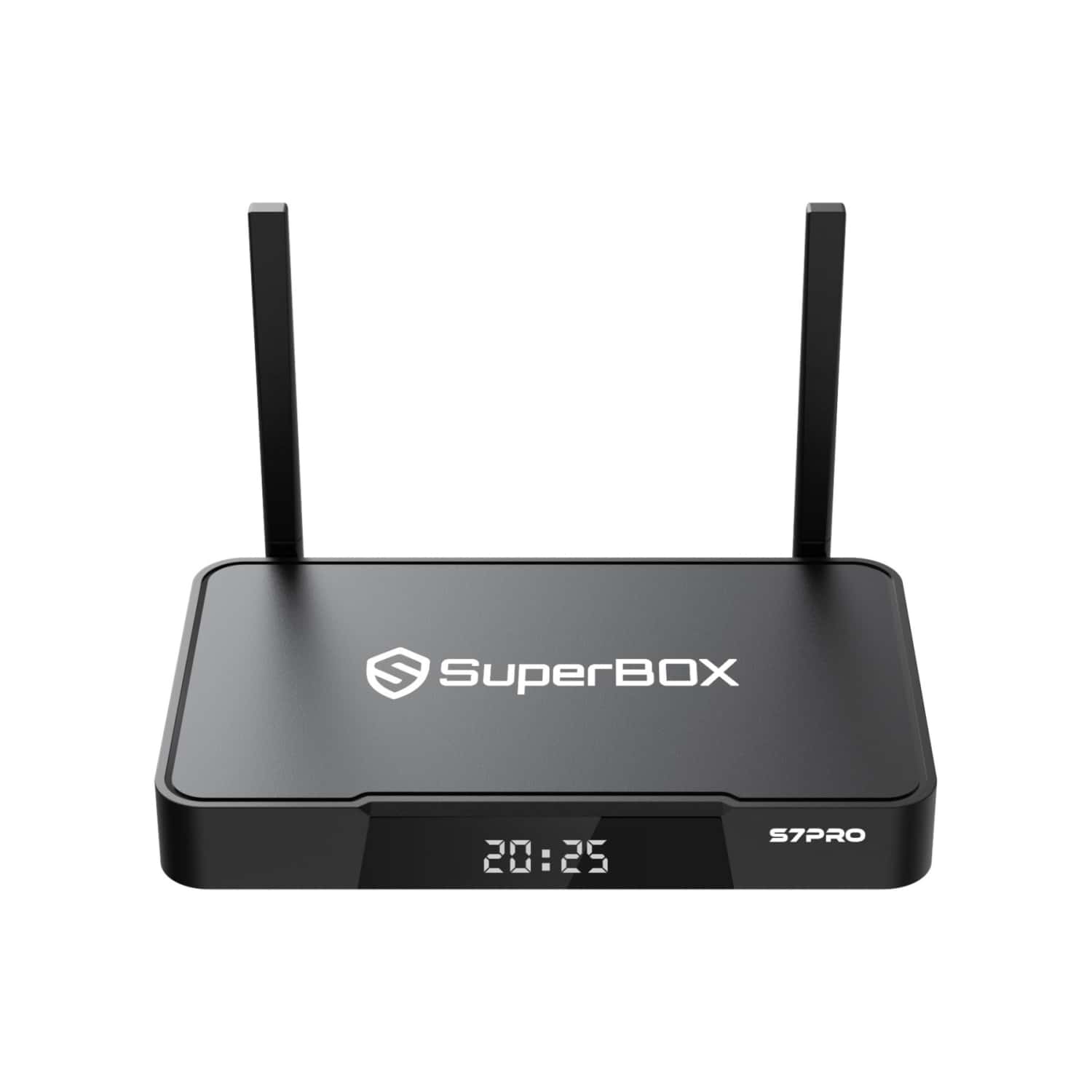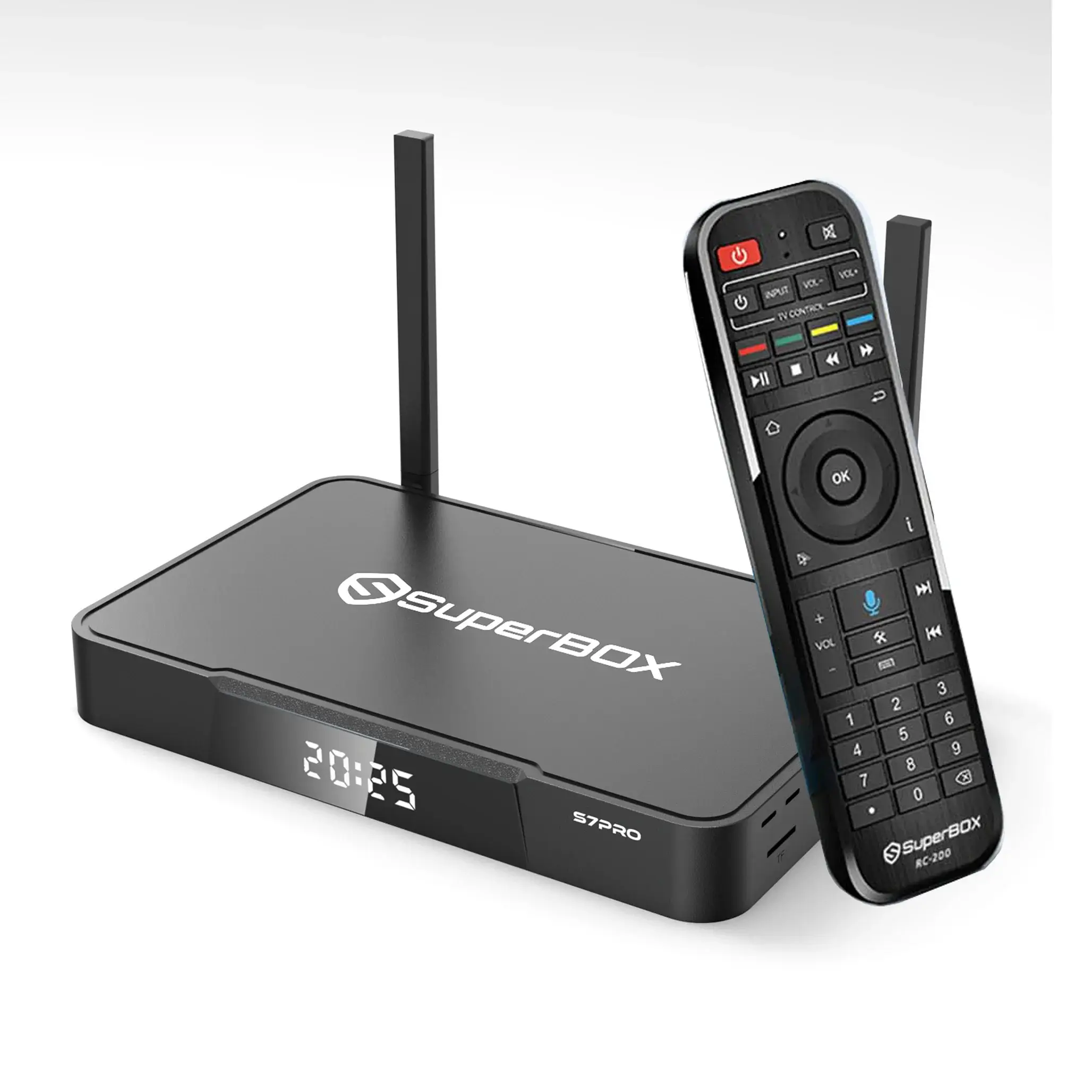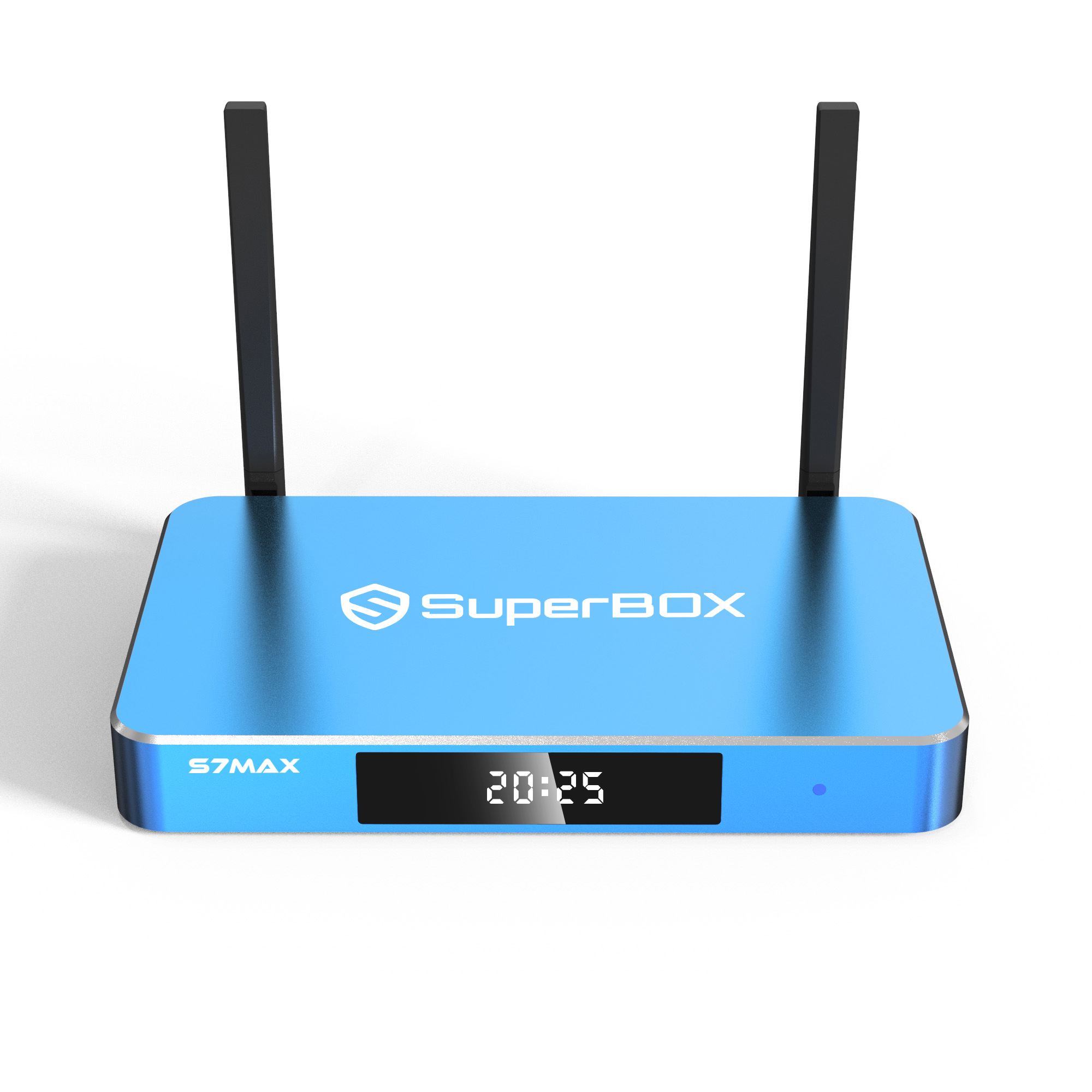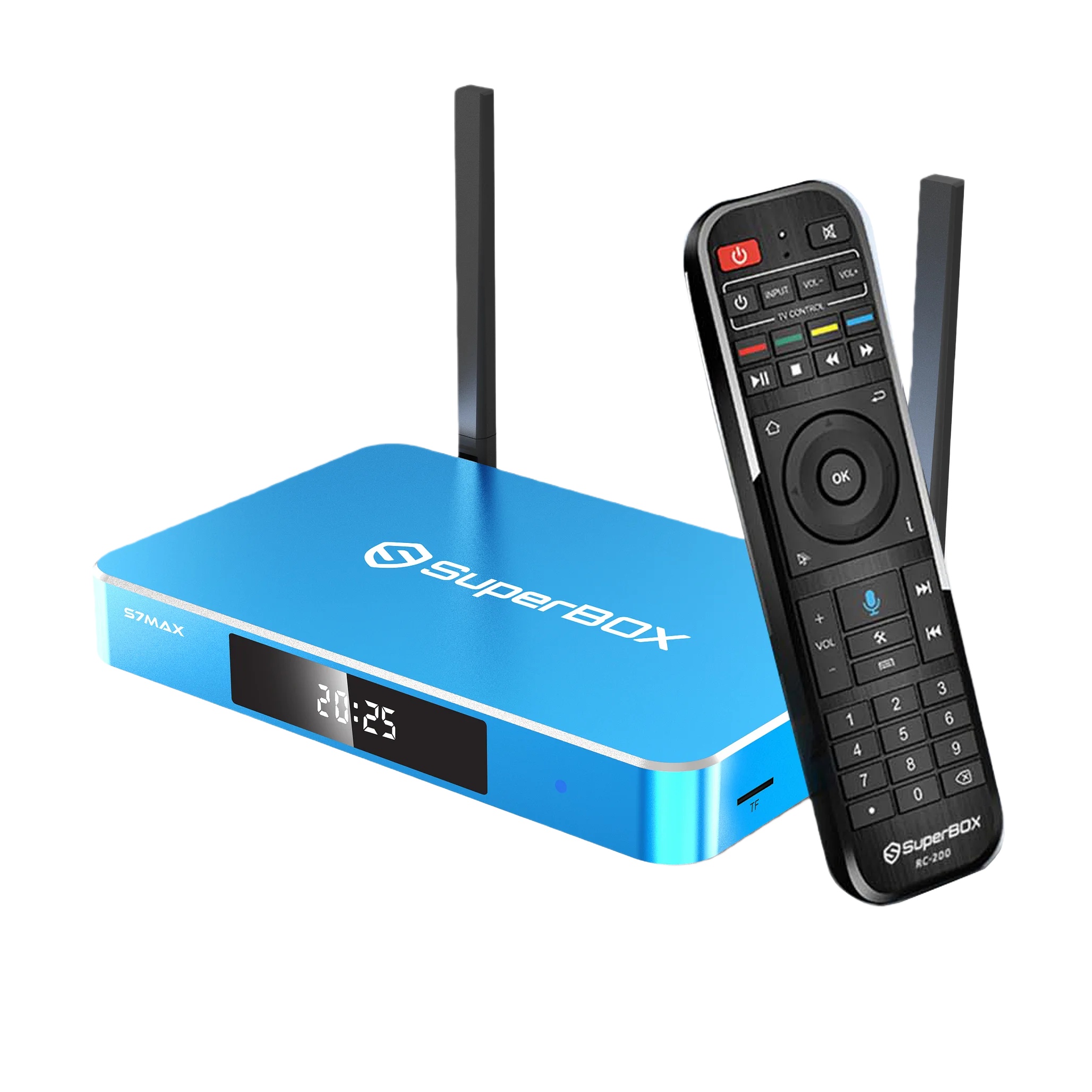
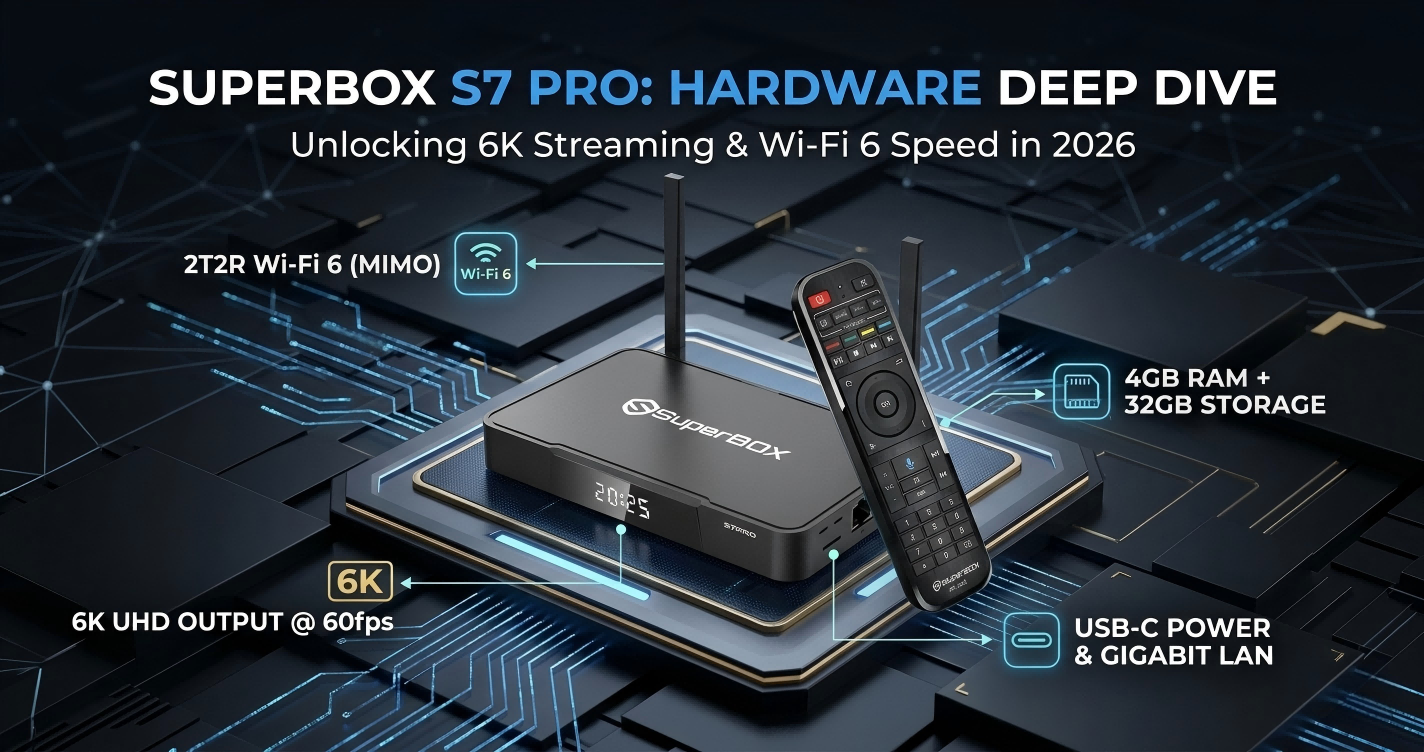
The launch of the SuperBox S7 Pro in late 2025 marked a pivotal shift in the hardware trajectory of premium Android TV boxes. As we move through 2026, the demand for stable, high-bitrate 6K content has made hardware specifications the primary differentiator for enthusiasts.
In this in-depth technical analysis, we will analyze the S7 Pro's configuration architecture and its impact on performance.
1. SoC & Processing Power: The Cortex-A53 Efficiency
At the heart of the SuperBox S7 Pro is the Quad-core ARM Cortex-A53 processor. While newer architectures exist, the A53 remains the industry gold standard for media streaming due to its thermal efficiency and specialized instruction sets for video decoding.
-
GPU Architecture: Paired with the Mali-G31 MP2, the S7 Pro handles H.265 6K @60fps hardware decoding with ease. This ensures that even high-dynamic-range (HDR) metadata is processed without frame drops, a common issue in lower-tier 2GB RAM units.
-
Thermal Management: The S7 Pro’s new gray housing isn't just aesthetic; it's designed with improved passive heat dissipation to maintain peak CPU clock speeds during 24/7 operation.
2. Connectivity Evolution: Wi-Fi 6 & 1000Mbps Ethernet
In 2026, network congestion is the #1 enemy of seamless streaming. The S7 Pro addresses this with a dual-pronged approach to connectivity:
2T2R Wi-Fi 6 Architecture
Unlike standard 1x1 antennas, the S7 Pro utilizes 2T2R (2 Transmitter, 2 Receiver) technology.
-
Why it matters: This MIMO (Multiple Input, Multiple Output) configuration doubles the potential spatial streams.
-
The Result: A more resilient connection that can penetrate walls and maintain high-speed 5G/Wi-Fi 6 throughput even when multiple devices are active on the same router.
Gigabit Wired Backbone
The inclusion of 1000Mbps Ethernet is a critical "Pro" feature. As ISP speeds commonly exceed 500Mbps in 2026, the legacy 100M ports found on older boxes become a bottleneck. The S7 Pro ensures your wired connection is future-proofed for the next generation of ultra-high-bitrate streams.

3. The Shift to Universal Standards: USB-C & I/O
The most visible hardware upgrade is the transition to USB Type-C.
-
Power Delivery: By swapping the proprietary DC barrel for a Type-C 5V/2A power port, SuperBox aligns with global electronic standards, allowing for easier cable replacement and increased portability.
-
Data Throughput: The addition of a USB 3.0 port alongside a USB-C data port allows for lightning-fast read speeds from external SSDs. This is vital for users playing local 80GB+ 4K Blu-ray remux files.
4. Android 12 & Memory Management
Running on Android 12, the S7 Pro benefits from improved memory heap management. With 4GB of DDR RAM, the system can keep more background processes active—such as the 7-Day Extended Time-Shift buffer—without triggering the OS's aggressive task killer. This results in a 30% faster app-switching experience compared to the S6 generation.
Technical Specifications at a Glance
| Component | Specification |
| OS | Android 12.0 |
| RAM/Storage | 4GB DDR / 32GB eMMC |
| Ethernet | 1000Mbps (Gigabit) |
| Wi-Fi | Wi-Fi 6 (802.11ax) with 2T2R |
| Resolution | Up to 6K @60fps |
| Bluetooth | 5.2 (High-Stability Audio) |
Is the Superbox S7 Pro worth buying?
For users who prioritize network stability and viewing experience, the SuperBox S7 Pro is the most suitable upgrade option on the market in 2026. The combination of Wi-Fi 6, 2T2R antennas, and Gigabit Ethernet eliminates the "buffering" issues that plague entry-level hardware. The S7 Pro is a highly cost-effective hardware device.
Looking to upgrade your home entertainment? [Explore the SuperBox S7 Pro at our Official Center here.]
-
Q: Does SuperBox S7 Pro support Wi-Fi 6?
-
A: Yes, it features a 2T2R Wi-Fi 6 module for increased stability and speed.
-
-
Q: What is the Ethernet speed of S7 Pro?
-
A: It is equipped with a 1000Mbps (Gigabit) Ethernet port.
-
-
Q: Can I use any USB-C cable for the S7 Pro?
-
A: Yes, the S7 Pro uses a standard USB-C power port (5V/2A) for universal compatibility.
-